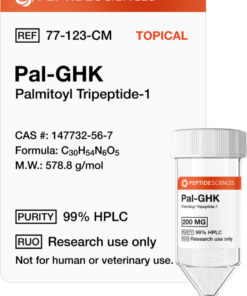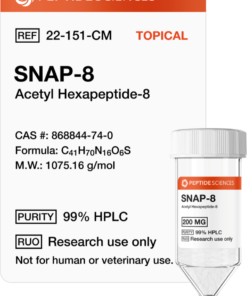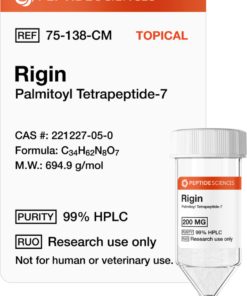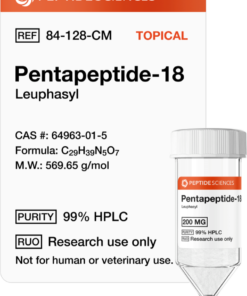
Topical Peptide Research. Expression Line Studies. Non-Invasive.
where to buy peptides You’ve researched systemic peptides. You know BPC-157, TB-500, and the GH secretagogues. But topical peptide research is a different world — and Acetyl Hexapeptide-3 is one of its most studied compounds.
Commonly known as Argireline®, this synthetic peptide has been extensively researched for its effects on expression lines — the wrinkles caused by repeated facial muscle contractions.
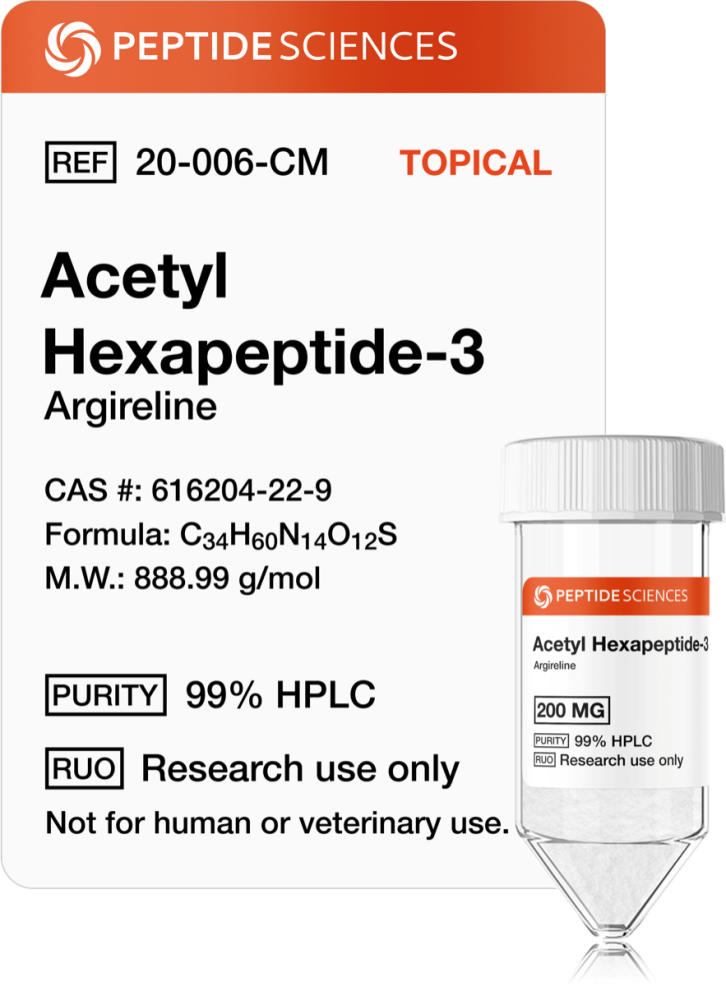
The Acetyl Hexapeptide-3 (Argireline) 200mg (Topical) is designed for cosmetic formulation research — not injection. Researchers use it to study:
-
Topical anti-wrinkle mechanisms
-
Neuromuscular inhibition pathways (topically applied)
-
Formulation stability and skin penetration
-
Combination effects with other cosmetic peptides
Let’s break down the peptide science behind this “Botox in a bottle” peptide.
What Is Acetyl Hexapeptide-3 (Argireline)?
Straight facts. No hype.
| Property | Details |
|---|---|
| Full name | Acetyl Hexapeptide-3 (also known as Acetyl Hexapeptide-8) |
| Trade name | Argireline® |
| Molecular weight | ~889 daltons |
| Amino acid sequence | Ac-Glu-Glu-Met-Gln-Arg-Arg-NH₂ |
| Mechanism | SNARE complex inhibition → reduced acetylcholine release |
| Application | Topical only (not for injection) |
| Primary research area | Expression line reduction |
Lyophilized powder. Sterile. ≥99% purity. Third-party tested. Vacuum-sealed container.
That’s peptide science for topical applications.
Why Argireline for Research? (The Enthusiast Take)
You know how Botox works — it injects a neurotoxin that blocks nerve signals to muscles. But what if you could research similar mechanisms without needles and without toxins?
Enter Argireline.
The problem with expression lines: Every time you smile, frown, or squint, your facial muscles contract. Over years, those repeated contractions create permanent lines — forehead lines, crow’s feet, the “11” lines between brows. where to buy peptides
The mechanism: Acetyl Hexapeptide-3 mimics the N-terminal end of SNAP-25 — a protein essential for acetylcholine release. By competing with SNAP-25, it temporarily reduces the amount of acetylcholine that reaches the neuromuscular junction.
Less acetylcholine = weaker muscle contraction = softer expression lines.
Why not just use Botox? For research purposes, Argireline offers a completely different pathway:
-
No toxins involved
-
Topical application (no injection variables)
-
Reversible, partial effect
-
Can be formulated with other ingredients
Important for researchers: The molecular weight of Argireline (~889 daltons) presents skin penetration challenges. Researchers studying topical formulations often combine it with penetration enhancers or encapsulation technologies.
That’s the kind of peptide science that cosmetic formulation researchers work with daily.
The Technical Expert Breakdown (Still Friendly)
For those who want mechanisms without the lecture:
Acetyl Hexapeptide-3 (Argireline) – Topical neuromodulatory peptide
-
Synthetic hexapeptide (6 amino acids)
-
Mimics the N-terminal domain of SNAP-25 (25kDa synaptosomal-associated protein)
-
Competes with SNAP-25 for binding to the SNARE complex
-
SNARE complex normally mediates acetylcholine vesicle docking and release
-
By blocking SNARE complex formation, Argireline reduces acetylcholine exocytosis
-
Reduced acetylcholine → reduced muscle contraction intensity
-
Topical application → localized effect only (no systemic absorption)
Key pharmacokinetic property:
-
Molecular weight: 889 Da (larger than typical topical actives)
-
Skin penetration: Low (approximately 0.01% to epidermis without enhancers)
-
Log P: Hydrophilic (poor lipid solubility)
-
This is why formulation research is critical
Comparison to Botulinum Toxin:
| Feature | Botulinum Toxin (Botox) | Argireline |
|---|---|---|
| Application | Injection | Topical |
| Mechanism | Cleaves SNAP-25 | Competes with SNAP-25 |
| Effect magnitude | Complete paralysis | Partial relaxation |
| Duration | 3-6 months | Hours (from single application) |
| Toxin | Yes (neurotoxin) | No |
| Research complexity | High (medical setting) | Moderate (cosmetic lab) |
That’s the kind of where to buy peptides that makes Argireline a unique research tool.
Research Applications
| Research Area | What Researchers Study |
|---|---|
| Expression line reduction | Efficacy of topical Argireline on simulated facial lines |
| Formulation development | Penetration enhancers, encapsulation, delivery systems |
| Combination studies | Synergy with Matrixyl, copper peptides, hyaluronic acid |
| Concentration-response | Optimal concentrations (typically 5-15% in formulations) |
| Comparative studies | Argireline vs. other neuromodulatory peptides |
| Stability testing | Shelf life, temperature effects, pH optimization |
Reconstitution & Formulation (For Topical Research Only)
Important: This product is for topical/cosmetic formulation research only. Not for injection.
What you need for formulation research:
-
Cosmetic base cream, serum, or gel
-
Weighing scale (mg precision)
-
Mixing equipment
-
Preservative system (if aqueous)
-
pH meter (optimal range: 5-7)
Typical research formulation guidelines:
| Concentration | Use Case |
|---|---|
| 5-10% | Standard research formulations |
| 10-15% | Higher concentration studies |
| 15-20% | Maximum concentration (diminishing returns above 20%) |
Simple formulation example (for research purposes):
Add 10mg of Argireline powder per 1ml of aqueous base for a 1% concentration.
For a standard 10% research serum:
→ 100mg Argireline per 1ml of base
Formulation considerations:
-
Solubility: Argireline is water-soluble — dissolves easily in aqueous bases
-
pH stability: Stable between pH 5-7
-
Temperature: Avoid heat above 40°C during formulation
-
Compatibility: Compatible with most cosmetic ingredients
-
Preservation: Use broad-spectrum preservative in water-based formulations
Penetration enhancement research:
Researchers often study Argireline with:
-
Ethanol (5-10%)
-
Propylene glycol
-
DMSO (laboratory use only)
-
Liposomal encapsulation
-
Micro-needling pretreatment
Reminder: This information is for formulation research purposes only. Not for human use outside of approved cosmetic research protocols.
Storage & Handling
| Stage | Temperature | Duration |
|---|---|---|
| Lyophilized powder (unopened) | -10°C to -20°C (freezer) | 12-24 months |
| After reconstitution in aqueous base | 2°C to 8°C (refrigerator) | 30-60 days (with preservative) |
| Avoid | Repeated freeze-thaw cycles | N/A |
Allow powder to reach room temperature before opening to prevent moisture condensation.
Acetyl Hexapeptide-3 vs. Other Cosmetic Peptides
| Peptide | Primary Mechanism | Best For |
|---|---|---|
| Acetyl Hexapeptide-3 (Argireline) | SNARE inhibition → muscle relaxation | Expression lines |
| Palmitoyl Pentapeptide-4 (Matrixyl) | Collagen synthesis stimulation | Fine lines, firmness |
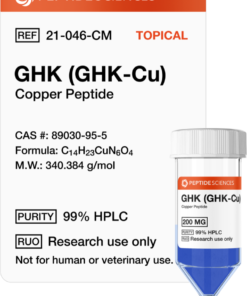
| Copper Tripeptide-1 (GHK-Cu) | Wound healing, collagen remodeling | Repair, texture |
| Palmitoyl Tetrapeptide-7 | Anti-inflammatory signaling | Skin aging |
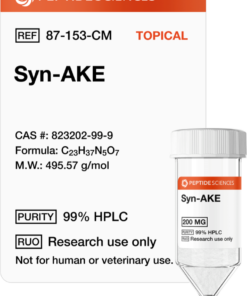
| Dipeptide Diaminobutyroyl Benzylamide (Syn-Ake) | Mimics waglerin-1 (muscle relaxation) | Expression lines |
Many formulation researchers combine Argireline with Matrixyl for complementary mechanisms — one relaxes muscles, one rebuilds collagen.
Purity & Testing Standards
Every batch of Acetyl Hexapeptide-3 (Argireline) 200mg (Topical) is tested by an independent, ISO-certified lab. You receive:
-
HPLC purity report (≥99%)
-
Mass spectrometry confirmation
-
Amino acid analysis
-
Endotoxin testing (for safety in formulation research)
A scannable QR code on each container links directly to batch-specific data.
That’s real peptide science transparency.
Frequently Asked Questions
Is this for injection?
ABSOLUTELY NOT. This product is for topical/cosmetic formulation research only. Do not inject. Do not use in any application requiring sterile injectable grade.
How does Argireline compare to Botox for research?
Botox is an injectable neurotoxin that completely blocks acetylcholine release. Argireline is a topical peptide that partially reduces acetylcholine release through competition, not cleavage. The research applications are completely different.
What concentration is typically used in research formulations?
Published research uses concentrations from 5-20%, with 10% being common. Higher concentrations show diminishing returns due to receptor saturation.
Does Argireline actually penetrate skin?
This is an active area of formulation research. Argireline’s molecular weight (889 Da) limits penetration. Researchers study penetration enhancers, encapsulation, and delivery systems to improve bioavailability.
Can I combine Argireline with other peptides in formulations?
Yes. Combination with Matrixyl (palmitoyl pentapeptide) is common for complementary mechanisms — one for muscle relaxation, one for collagen stimulation.
How long does one 200mg vial last in research?
At 10% concentration in a serum base:
200mg yields approximately 2ml of finished formulation.
This is typically enough for small-batch formulation research, not full-scale production.
Why is this peptide called “Botox in a bottle”?
Marketing name only. The mechanism is similar (SNARE complex inhibition) but the magnitude, duration, and application method are completely different. Use accurate scientific terminology in research documentation.
What’s the difference between Acetyl Hexapeptide-3 and -8?
They refer to the same compound. The peptide sequence is identical. -3 and -8 are naming variations from different suppliers/patents.
Research Summary Table
| Research Parameter | Value/Observation |
|---|---|
| Primary target | SNARE complex, SNAP-25 |
| Effect | Reduced acetylcholine release |
| Optimal pH range | 5-7 |
| Solubility | Water-soluble |
| Typical research concentration | 5-15% |
| Skin penetration (unmodified) | Low (~0.01% to epidermis) |
| Patent holder | Lipotec (Argireline®) |
The Bottom Line
You understand that peptide science extends beyond systemic injectables. Topical peptides like Acetyl Hexapeptide-3 (Argireline) represent a completely different research category — cosmetic formulation science.
The Acetyl Hexapeptide-3 (Argireline) 200mg (Topical) delivers:
-
200mg of ≥99% pure hexapeptide
-
Third-party tested, HPLC-verified
-
The well-studied “SNAP-25 competitor” mechanism
-
Water-soluble for aqueous formulation research
-
Suitable for expression line research applications
Important: This is for TOPICAL COSMETIC FORMULATION RESEARCH ONLY.
Researchers use this peptide to study:
-
Topical neuromodulation mechanisms
-
Expression line reduction pathways
-
Formulation penetration enhancement
-
Combination effects with other cosmetic peptides
Research smart. Know your application. Keep it topical.
This product is intended for cosmetic formulation research and laboratory study purposes only. Not for injection. Not for human consumption. Always comply with local regulations regarding cosmetic ingredient research.


Reviews
There are no reviews yet.